How can transcription workflows be made less painful for developers?
Ever since speech‑to‑text APIs became widely available, developers have been eager to turn raw calls, meetings, and videos into features their users actually value: searchable archives, automatic notes, smart summaries, and insights. Instead of building models from scratch, they plug into cloud providers and specialized vendors, wire up a few endpoints, and ship.
In theory, this should be simple: send audio, get text, and move on. In practice, the journey from “raw recording” to “production‑ready insight” is surprisingly fragmented. Each provider offers its own set of models, flags, post‑processing tools, and webhook patterns. Developers juggle uploads, polling, retries, extra APIs for redaction or summarization, plus their own glue code to make it all hang together.
As products grow, the hidden complexity becomes obvious. One feature needs diarization and summaries, another needs PII redaction and topic tagging, and a third needs near‑real‑time captions. Each use case ends up with its own custom pipeline, often duplicated across services and teams. When a transcript is wrong or a job is slow, debugging is a maze of logs, parameters, and audio files spread across systems.
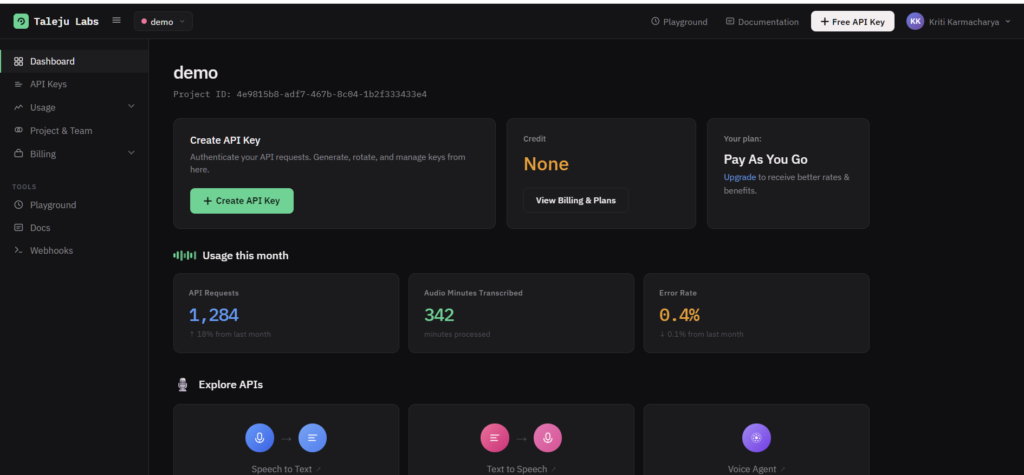
Even experienced teams report that they spend more time orchestrating transcription workflows than designing the user experiences that sit on top of them. Our app was created to tackle this specific developer frustration: to make working with audio and video agents as straightforward as calling one endpoint that already understands the workflow you’re trying to ship.